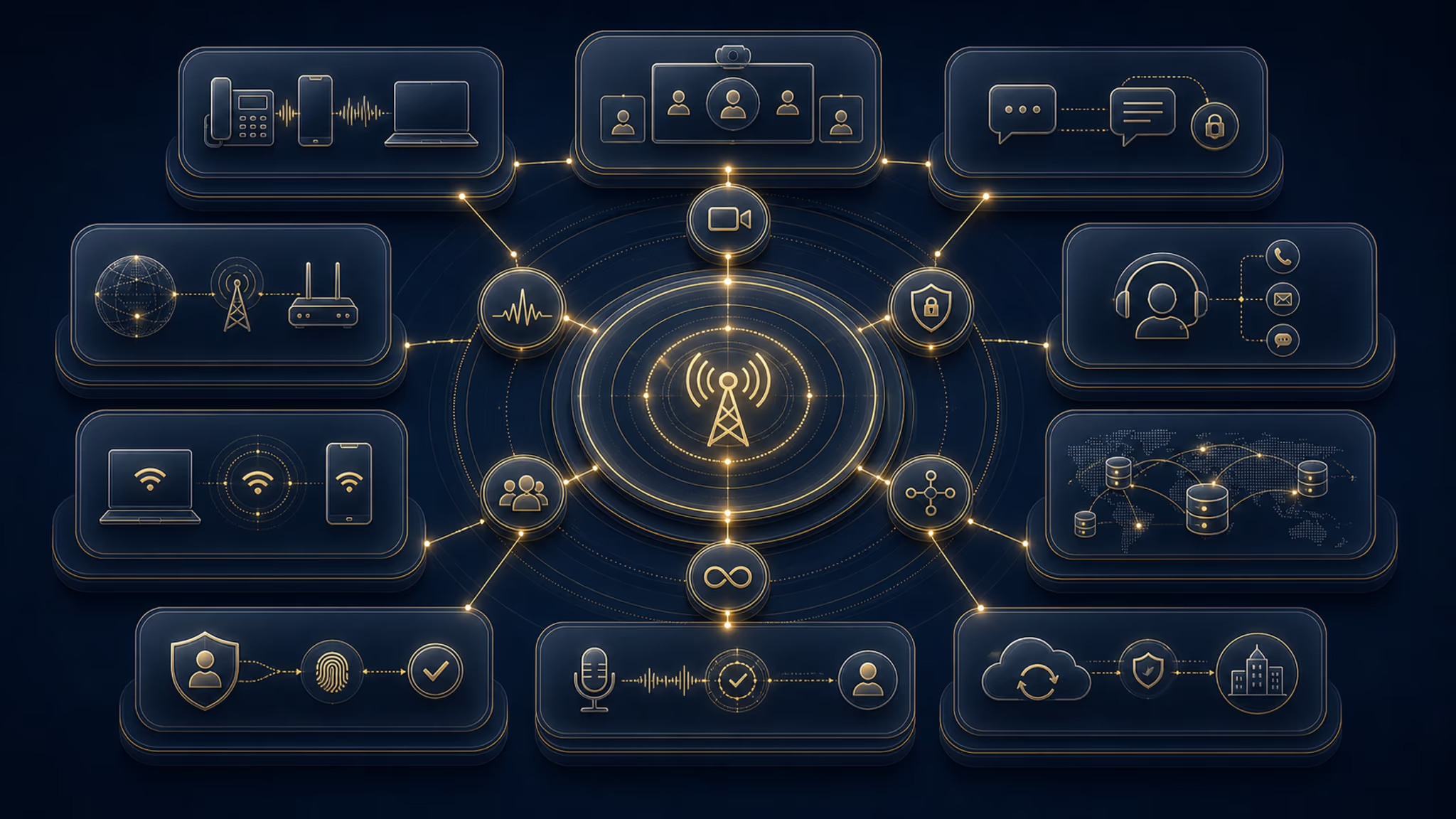
We unify telephony, video, messaging, and file sharing on a single platform; we optimize license costs and build a reliable communications backbone for hybrid work.
EVIDENCEISO 27001ISO 27017KVKKScope record
01Current stateTopology, traffic, and dependency visibility.
02Target architectureSegmentation, capacity, and availability design.
03Controlled cutoverChange window, validation, and rollback plan.
04HypercareMonitoring, tuning, and operational handover.
POSITION
Where this service sits in the portfolio
SERVICE SCOPE
What this service addresses
The critical topics this service addresses and the outcome we deliver in each.
Communication unified on a single platform
contract-scoped
We unify phone, video, messaging and file sharing under UCaaS and simplify IT operations.
Optimized licensing cost
measured target
Through a license review and usage analysis we make communication cost manageable with a baseline measurement, target and review cadence.
Higher hybrid-work productivity
evidence readiness
We build a reliable communications infrastructure with an architecture suited to hybrid and remote work scenarios.
Measurable service quality with clear SLAs
contract-scoped
We make service quality measurable through a support escalation procedure and SLA definitions, validated by a user acceptance survey.
Delivery model
Delivery approach
How we phase the service across delivery, governance, and connected service pillars.
01
We begin with an inventory and usage analysis of the existing communications infrastructure, producing a UCaaS platform comparison (Teams, Zoom, Webex, RingCentral), a license review and an architecture design suited to hybrid work.
02
We deploy and configure the platform: SIP trunk/VoIP migration planning, meeting-room AV technologies (Teams Rooms, Zoom Rooms) and communication security (encrypted calling, DLP, compliance recording).
03
We deliver configuration documents, a number-porting plan, end-user training materials and SLA definitions, and manage the cutover through a parallel-running period that keeps the old and new systems active simultaneously, porting numbers outside business hours.
Operating contexts
Example operating contexts
Illustrative surfaces where this service is commonly activated.
Gradual move of an existing PBX to the cloud
Gradual migration that preserves the existing PBX investment with SIP trunk and hybrid integration; optional full cloud migration.
Teams Phone with GSM line integration
Integrating existing phone numbers and GSM lines into Teams via Operator Connect or Direct Routing.
Compliance recording in regulated sectors
Activating compliance recording in regulated sectors such as finance and healthcare.
DEPTH
Technical and compliance depth
This service's depth on sector-specific technical and compliance topics.
Voice and video quality management
Multi-site quality measurement and validation through SD-WAN QoS policies, bandwidth management and location-based performance monitoring.
Communication security and compliance
Encrypted calling, DLP and compliance recording; configuration aligned with regulatory expectations in regulated sectors such as finance and healthcare.
Meeting-room and infrastructure technologies
Teams Rooms / Zoom Rooms AV integration; infrastructure based on SIP trunk, SBC, VoIP gateway and QoS.
What It Solves
Organisations operating fragmented communication stacks across on-premises PBX, legacy conferencing hardware, and disconnected messaging platforms face productivity losses, collaboration friction, and unsustainable maintenance costs. The proliferation of unmanaged communication tools also creates compliance and data retention risks. Our Modern Communication Solutions practice consolidates voice, video, messaging, and contact centre capabilities into a unified UCaaS architecture with governed licence management.
Microsoft Teams Contact Centre, Cisco Webex Contact Center, Genesys Cloud CX
Scope
The engagement covers communication platform assessment, network readiness validation, UCaaS architecture design, phased migration execution, and ongoing managed service handover. We include end-user adoption programmes to maximise return on investment and governance frameworks to control licence costs as the organisation grows. Scope extends to contact centre, operator and attendant console, and integration with ITSM and CRM systems.
Network readiness assessment for voice quality (jitter, latency, packet loss)
Pilot deployment with user acceptance testing and E2E validation
End-user adoption programme with role-based training curricula
Governance framework for licence lifecycle and usage analytics
Key Benefits
Benefit
Make stakeholder confidence, quality, and adoption outcomes traceable through agreed evidence indicators
Benefit
Shorten operational cycle time against agreed measurement targets and acceptance criteria
Benefit
Enable remote and hybrid work for defined workforce groups without additional hardware investment
Network QoS
DSCP marking, QoS policies per RFC 4594, bandwidth reservation
Microsoft Viva Learning, in-person workshops, digital adoption platform
Analytics
Microsoft Teams Admin Center, Call Quality Dashboard (CQD)
Deliverables
Our communication solution deliverables provide both technical and business value artefacts. Technical teams receive detailed configuration documentation and integration guides, while business stakeholders receive adoption dashboards and licence optimisation reports. All deliverables are produced in alignment with Microsoft FastTrack and Cisco Validated Design methodologies.
UCaaS architecture design document and network topology diagrams
SBC configuration guides and Direct Routing dial plan documentation
End-user quick reference cards and training materials by role
Licence optimisation report with monthly recurring savings model
Key Benefits
Benefit
Shorten operational cycle time against agreed measurement targets and acceptance criteria
Benefit
Make cost and resource optimization measurable against the agreed baseline and review cadence
Benefit
Measure adoption ROI with 30/60/90-day usage dashboards aligned to business objectives
Config Documentation
Microsoft Teams Admin Center export, PowerShell runbooks
Dial Plan Tools
Teams Phone normalisation rules, Cisco Unified CM SRST
Licence Tracking
Microsoft 365 Admin Center, CoreView, Torii SaaS management
Adoption Metrics
Teams usage analytics, feature adoption rates by cohort
Frequently Asked Questions
Can we retain our existing on-premises phone numbers during migration to UCaaS?
Yes. Number porting is a standard component of our UCaaS migrations. We manage the porting process with your carrier, configure geographic and non-geographic number routing in the SBC, and run parallel operation of the legacy PBX and new UCaaS platform during the transition period to ensure zero loss of inbound calls.
How do you handle call recording compliance requirements in a UCaaS environment?
We implement compliant call recording solutions that integrate natively with the UCaaS platform, storing recordings in encrypted, policy-governed storage with role-based access controls. Retention policies are configured to meet your specific regulatory requirements, whether MiFID II, PCI DSS, or sector-specific mandates, with automated deletion at the end of the retention period.
What network changes are required before deploying UCaaS across multiple sites?
We conduct a pre-migration network readiness assessment measuring round-trip latency (target under 150ms), jitter (under 30ms), and packet loss (against agreed measurement targets) across all sites. Where deficiencies are found, we implement QoS policies, increase WAN bandwidth on bottleneck links, and configure local internet breakout via SD-WAN to minimise voice hairpinning.
How do you manage the complexity of migrating a multi-site organisation with thousands of users?
We use a wave-based migration approach, grouping users by site, business unit, and communication dependency. Each wave includes a pre-migration readiness check, a supervised cutover window of 2 to 4 hours, and a 48-hour hypercare period with dedicated support engineers on standby. We typically complete waves of 500 users per week at steady cadence.
Do you provide ongoing licence management after the initial migration?
Yes. We offer a managed licence optimisation service that runs automated monthly reviews of licence assignment versus actual usage. Unused licences are flagged for reassignment or removal, and seasonal licence scaling recommendations are provided ahead of business cycle peaks. This service surfaces annual licence savings opportunities against the agreed baseline.
Can the end-user training materials be white-labelled with our company branding?
Yes. All end-user facing materials including quick reference cards, video tutorials, and e-learning modules are delivered in editable source formats and can be branded with your corporate identity. We also configure the Microsoft Viva Learning or SharePoint-based training hub with your branding before launch.
Related service groups
Compare the other workstreams under the same pillar as well.